
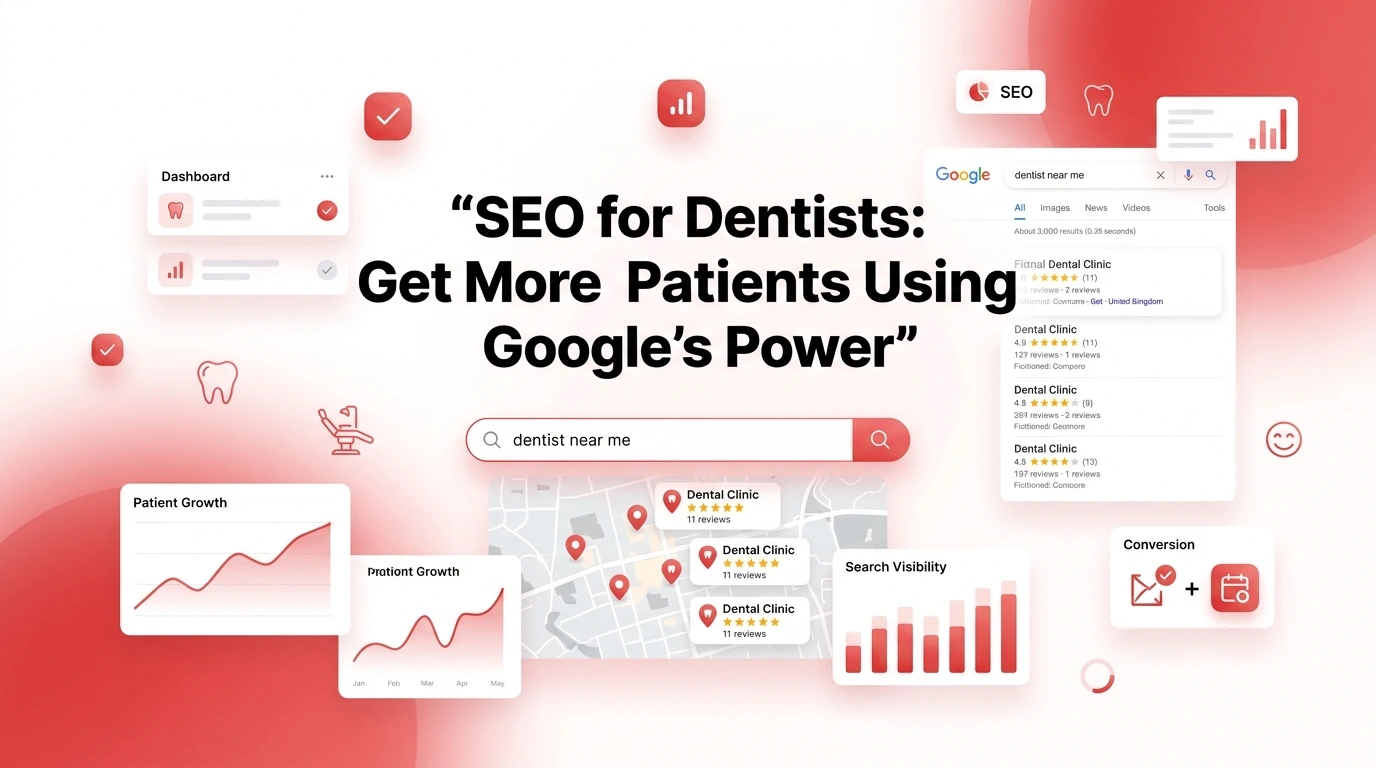
SEO for dentists is a structured patient acquisition system that helps dental clinics appear when people actively search for treatments, emergencies, or dental care services on Google. In competitive cities like New York, patients rarely choose randomly. They rely on search results, reviews, and trust signals before booking an appointment.
A dental clinic may provide high-quality care, modern equipment, and experienced dentists, yet still struggle with consistent patient flow if visibility is weak. This happens because patient discovery has shifted almost completely to search engines.
When a potential patient searches for services like “dentist near me,” “teeth cleaning NYC,” or “emergency dental clinic,” they are already in decision mode. At this stage, ranking position directly influences whether your clinic receives a booking or loses the patient to a competitor.
SEO is not just about traffic generation. It directly affects appointment volume, treatment bookings, and long-term clinic revenue stability.
Why SEO Matters More for Dental Clinics
Dental SEO is more critical compared to many other industries because patients make decisions based on urgency, trust, and perceived expertise. Unlike retail or general services, dental care involves personal health and financial commitment.
Patients do not evaluate dozens of options for long periods. They typically choose from the top visible results that appear in Google Maps or organic listings. This makes search visibility a direct business growth factor.
Another important factor is treatment value. Dental services such as implants, braces, cosmetic dentistry, and root canals carry high transaction value. This means even a small improvement in rankings can significantly impact monthly revenue.
SEO allows clinics to consistently appear at the exact moment patients are ready to book, which is why it performs strongly as a long-term acquisition channel.
How SEO for Dentists Works
SEO for dentists works through a structured system that connects search visibility with patient conversion behavior. It is not a single tactic but a combination of multiple layers working together.
When these layers are properly aligned, Google recognizes the clinic as a relevant and trustworthy provider for dental-related searches.
The system works through four core stages:
- Search Demand Capture (keywords and intent targeting)
- Visibility Building (ranking in maps and organic results)
- Trust Development (reviews, authority, credibility signals)
- Conversion Execution (calls, bookings, appointment requests)
Each stage depends on the previous one. If trust or conversion layers are weak, even high rankings fail to generate consistent patient flow.
What Makes Dental SEO a High-Trust and High-Competition Industry
Dental SEO operates in one of the most competitive and trust-sensitive markets. Google applies stricter evaluation signals for medical-related content compared to general industries.
This is because dental decisions involve:
- health risk consideration
- financial investment
- long-term treatment commitment
For this reason, Google prioritizes clinics that demonstrate real-world trust signals such as:
- verified business presence
- strong review profiles
- consistent patient feedback
- authoritative website structure
Unlike simple service businesses, dental SEO requires both technical optimization and credibility alignment.
How Patients Search for Dental Services in New York
Patient search behavior in cities like New York is highly urgent and location-driven. Most users search on mobile devices and expect immediate results.
Instead of general queries, patients use specific intent-based searches such as:
- emergency dentist near me
- teeth whitening Manhattan
- dental implants Brooklyn
- affordable dentist NYC
These searches indicate immediate intent to book, not research.
Patients rarely browse multiple pages. They choose from top listings, especially Google Maps results. This makes ranking position extremely important for patient acquisition.
Why Dental SEO is a Revenue-Driven System, Not a Marketing Expense
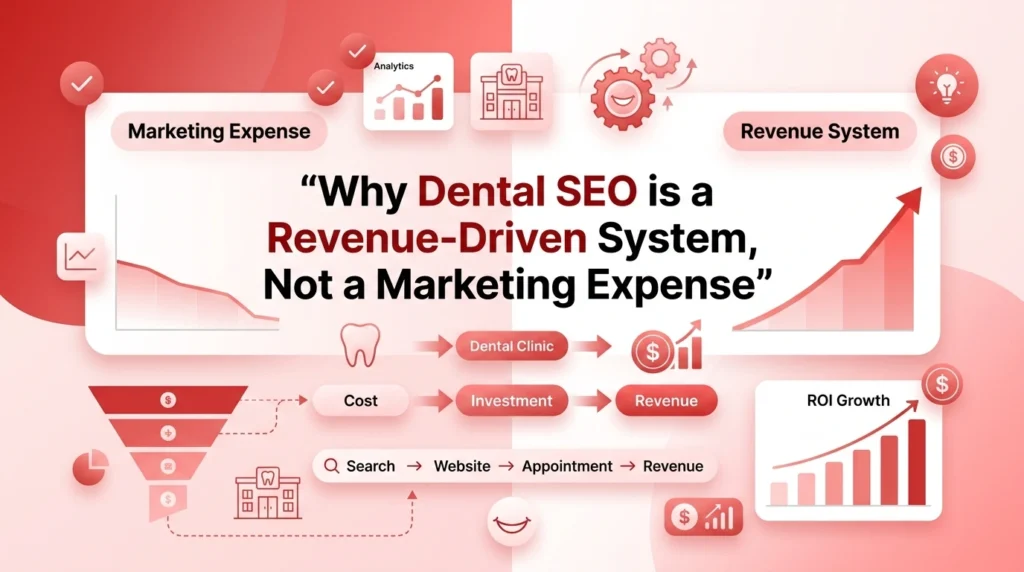
SEO for dentists should be treated as a revenue system rather than a marketing cost. Every ranking improvement directly influences appointment volume and treatment bookings.
A single dental patient can represent multiple revenue streams over time. Treatments like implants, orthodontics, and cosmetic dentistry significantly increase lifetime patient value.
Unlike paid advertising, SEO continues to generate patient leads even when active spending decreases. This creates long-term stability for dental clinics operating in competitive regions.
Over time, SEO reduces dependency on paid ads and improves profitability by lowering cost per patient acquisition.
Why Local SEO is the Best Approach for Dental Clinics
Local SEO is the most important component of dental SEO because patients usually search for nearby clinics. Google prioritizes proximity, relevance, and trust when showing local results.
The Google Business Profile plays a major role in this system. It influences visibility in map listings, which often appear above organic search results.
Key local SEO factors include:
- accurate business information
- consistent NAP data
- patient reviews and responses
- service category optimization
- regular profile activity
Strong local SEO improves both visibility and conversion rates because patients trust map listings more than generic websites.
Why Most Dental Clinics Fail to Achieve SEO Results
Many dental clinics struggle with SEO, not because of competition, but due to incomplete execution.
Common issues include:
- lack of structured service pages for treatments
- Weak Google Business Profile optimization
- inconsistent patient reviews
- absence of location-based content
- Poor website conversion structure
These problems reduce visibility and limit patient acquisition potential even when SEO efforts exist.
SEO success requires full system execution rather than partial optimization.
Dental SEO is a Trust-Based Visibility System
SEO for dentists is not only about ranking higher on Google. It is about building a structured trust system that connects search visibility with real patient decisions.
The clinics that succeed are not always the largest or oldest. They are the ones that consistently appear, build trust signals, and convert visibility into appointments.
When SEO is executed correctly, it becomes a predictable patient acquisition channel rather than a marketing experiment.
How Dental SEO Converts Visibility into Real Patient Appointments
SEO for dentists becomes valuable when search visibility converts into booked appointments. Ranking on Google is the starting point, not the outcome. The actual performance depends on how effectively a dental clinic turns search traffic into patient action.
When a user searches for dental services, they are not exploring randomly. They are comparing trust signals, evaluating service clarity, and deciding which clinic feels reliable enough to contact. This decision happens within seconds.
A strong dental SEO system ensures three things work together:
- visibility in search results
- trust building through content and reviews
- frictionless booking experience
If any one of these components is weak, patient flow becomes inconsistent even with good rankings.
Dental SEO Pricing Models and What They Include
Dental SEO pricing varies based on competition, location, and service scope. In high-competition cities like New York, investment requirements are higher due to stronger ranking competition.
SEO is not a fixed package. It is a system that scales based on visibility goals and treatment coverage.
Standard Dental SEO Pricing Structure
| SEO Level | Monthly Investment | What is Included |
| Local Starter SEO | $600 – $1000 | Basic optimization + Google profile setup |
| Growth SEO System | $1000 – $2500 | Content + local SEO + backlinks |
| Competitive Dental SEO | $2500 – $5000+ | Full system + multi-service + authority building |
Higher investment levels are required when targeting multiple treatments or competitive urban areas.
What Determines the Cost of Dental SEO Services
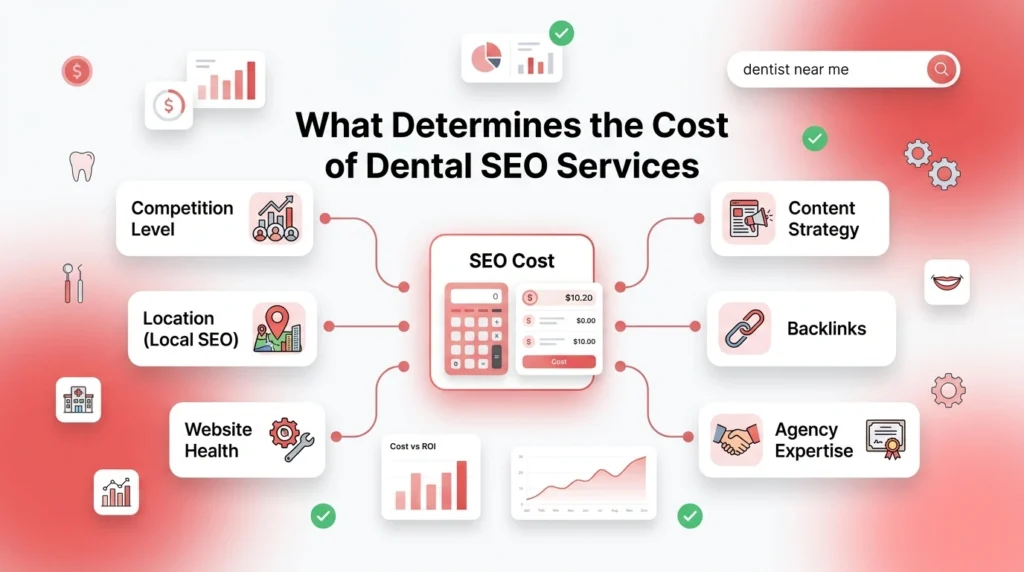
Dental SEO pricing depends on several strategic factors rather than fixed deliverables.
Key cost drivers include:
- number of dental services offered
- competition level in the city
- content depth required for treatment pages
- backlink and authority requirements
- number of service locations
A cosmetic dentistry clinic targeting Manhattan requires significantly more SEO effort than a small general clinic in a low-competition suburb.
Advanced Dental SEO Strategy That Builds Long-Term Authority
A strong dental SEO system is built on structured authority creation rather than isolated optimization efforts. Google evaluates dental websites based on depth, consistency, and trust signals.
An advanced SEO strategy focuses on building topical authority across all patient search stages.
This includes:
- treatment-level service pages
- location-based landing pages
- educational dental content
- trust and review systems
When combined, these elements create a complete patient acquisition ecosystem.
Service Area Pages Strategy for Local Business
Service area pages allow dental clinics to target multiple geographic regions instead of relying on a single location page. This expands visibility across different patient segments.
Each location page targets users searching within specific areas, such as:
- dentist in Manhattan
- dentist in Brooklyn
- dentist in Queens
- dentist in Bronx
Each page should include:
- localized patient concerns
- treatment availability by area
- trust signals specific to that location
- internal links to core services
This structure improves rankings in multiple geographic search zones simultaneously.
Why Informational Dental Blogs Drive High-Quality Traffic
Informational content plays a critical role in dental SEO because it attracts patients in the research phase before they book appointments.
These users are not ready immediately, but they are building trust and awareness.
High-performing dental blog topics include:
- tooth pain causes and solutions
- how dental implants work
- signs of gum disease
- cost of braces in NYC
- teeth sensitivity explanations
These blogs should always guide users toward relevant service pages, creating a natural conversion path.
How Dental Condition Guides Build Authority and Patient Trust
Condition-based guides are one of the strongest EEAT signals in dental SEO. They demonstrate expertise and help patients understand symptoms before choosing treatment.
These guides should be written in a structured medical-style format that explains:
- symptoms
- causes
- treatment options
- urgency levels
Examples include:
- bleeding gums guide
- tooth decay stages explanation
- wisdom tooth pain management
- enamel erosion symptoms
This type of content builds trust before the patient even contacts the clinic.
How “Treatment Option Comparison” Content Increases Conversions
Patients often compare multiple treatment options before booking. SEO content that explains options clearly improves decision-making speed.
For example:
- Dental Implants vs. Bridges
- braces vs clear aligners
- Whitening Options Comparison
This type of content reduces confusion and increases booking confidence by helping patients understand what is suitable for their condition.
Local SEO Execution Strategy for Dental Clinics
Local SEO is the foundation of dental patient acquisition. It determines how often a clinic appears in Google Maps and local search results.
Key execution areas include:
- Google Business Profile optimization
- consistent NAP citations across directories
- review acquisition strategy
- service category refinement
- location-based content alignment
Google prioritizes clinics with consistent activity and strong local trust signals.
Also Read: SEO for Lawyers in New York: How Law Firms Build Consistent Case Flow with Search
Why Most Dental SEO Campaigns Fail (System Breakdown)
Failure in dental SEO rarely comes from keyword targeting. It comes from structural incompleteness.
Most clinics only implement 30–40% of the required system.
Critical failure points:
1. Treatment Pages Are Too Generic
Many clinics use one service page for all treatments. Google cannot assign topical authority from generalized content.
Result:
- weak rankings for high-value keywords
- low conversion relevance
2. No Entity-Based Authority Building
Google evaluates dental clinics as entities, not websites.
Missing:
- structured reviews
- consistent citations
- brand signals across platforms
Without entity strength, rankings remain unstable.
3. No Search Intent Segmentation
Patients searching:
- “tooth pain relief”
- “dental implants cost”
- “emergency dentist NYC”
They are all in different intent stages.
Most clinics treat them the same. This breaks the conversion flow.
Common Dental SEO Mistakes That Limit Growth
Many clinics unknowingly reduce their SEO performance due to avoidable mistakes.
These include:
- using generic service pages without a treatment focus
- ignoring local SEO optimization
- Inconsistent posting on Google Business Profile
- lack of educational content
- weak internal linking structure
Fixing these issues often results in faster ranking improvements than adding new campaigns.
How Dental SEO Actually Converts Search Visibility into Booked Patients (System View)
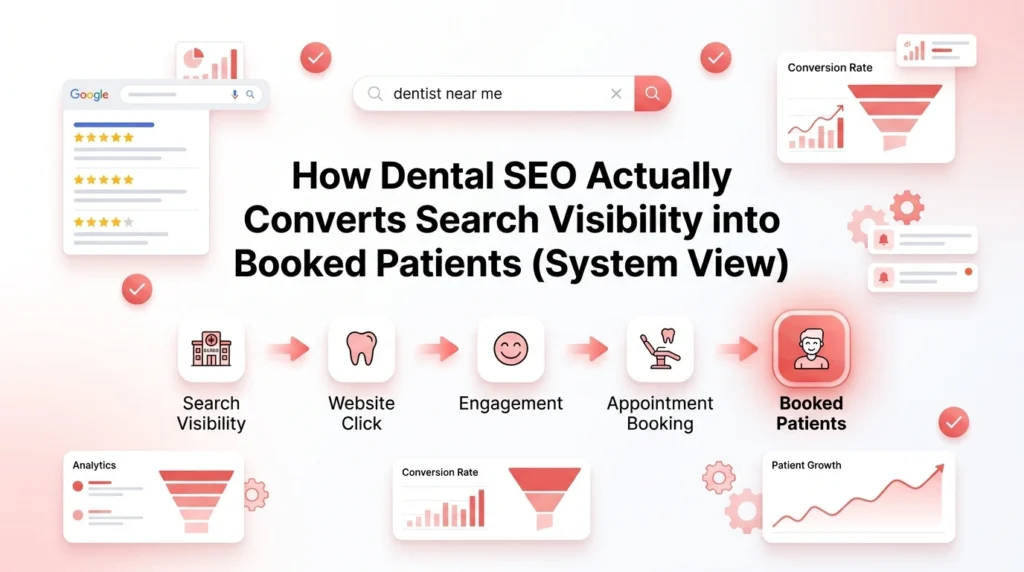
SEO for dentists becomes valuable when it functions as a full patient acquisition system, not a visibility channel. Most dental clinics misinterpret SEO as ranking improvement, but rankings alone do not generate predictable appointments.
The real system works in a chain:
Search Intent → Google Visibility → Trust Validation → Conversion Action
Each stage has a measurable impact on patient behavior.
When a patient searches “emergency dentist near me,” they are not exploring. They are evaluating urgency, trust, and availability within seconds. At this moment, Google does not reward the “best clinic.” It rewards the most trusted and most visible structured entity.
This is why clinics with weaker clinical expertise but stronger SEO systems consistently outperform better clinics with poor digital structure.
The conversion happens when three elements align:
- strong local ranking (map + organic)
- review trust density
- clear treatment + contact pathway
If even one element is weak, patients exit and move to a competitor within seconds.
Why Dental SEO Produces Higher ROI Than Most Healthcare Marketing Channels
Dental SEO has one of the highest ROI structures in local healthcare marketing because it is directly tied to high-value treatment economics.
Unlike low-ticket services, dentistry includes recurring and high-margin procedures such as:
- implants
- orthodontics
- cosmetic restoration
- surgical treatments
A single patient may generate revenue across multiple visits and treatments over time.
This changes SEO from “lead generation” into lifetime patient value acquisition.
A clinic ranking for “dental implants NYC” is not buying traffic. It is acquiring high-intent patients with strong treatment value potential.
SEO ROI increases over time due to:
- compounding keyword rankings
- reduced dependency on ads
- increasing trust signals from reviews
- content authority accumulation
Unlike ads, SEO does not reset monthly. It strengthens continuously if maintained.
Advanced Dental Local SEO: Why Map Rankings Dominate Patient Flow
Google Maps is the primary conversion zone for dental clinics in competitive cities.
Map ranking depends on three core systems:
1. Proximity Logic
Google prioritizes clinics closer to the searcher. However, proximity alone does not guarantee ranking.
2. Relevance Signals
Includes:
- keyword alignment in Google Business Profile
- service categories
- structured descriptions
3. Authority Signals
Includes:
- review volume
- review frequency (velocity)
- citation consistency
- website authority strength
Most clinics only optimize one layer. Top-ranking clinics optimize all three simultaneously.
Why Treatment Pages Are the Highest Revenue SEO Asset
Treatment pages are not informational content. They are direct revenue pages.
Each page must operate as a conversion funnel:
- problem explanation
- treatment solution
- process breakdown
- outcome expectations
- booking trigger
Examples:
- dental implants NYC
- teeth whitening Manhattan
- Invisalign treatment guide
- root canal procedure explanation
These pages rank because they match high commercial intent searches, not informational traffic.
Informational Dental Content: Why It Still Drives Patient Acquisition
Informational blogs are not secondary SEO assets. They are trust-building entry points.
Patients rarely book immediately. They search for symptoms first.
Examples:
- gum bleeding causes
- tooth pain at night
- sensitivity after whitening
- wisdom tooth removal signs
These pages:
- capture early-stage intent
- build authority trust
- guide users into service pages
Without informational content, clinics lose early funnel traffic.
SEO vs Paid Advertising Platforms (Real System Difference)
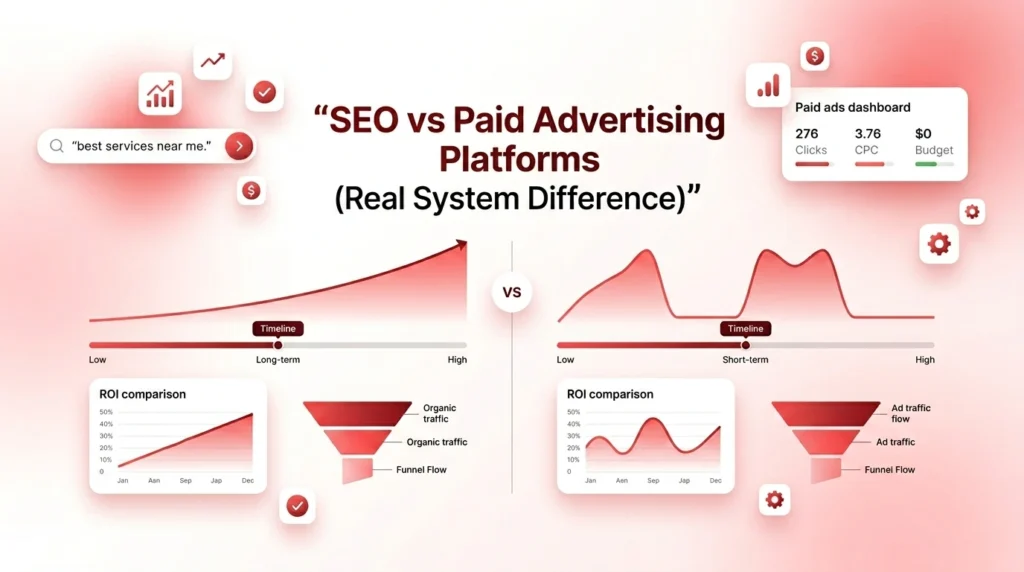
| Factor | SEO System | Paid Ads |
| Control over traffic | High | Medium |
| Cost stability | Improves over time | Increases over time |
| Trust perception | Strong | Moderate |
| Long-term asset value | High | Low |
| Dependence risk | Low | High |
SEO builds ownership of patient demand. Ads rent visibility.
Dental SEO is an Entity + Trust + Intent Engine
Dental SEO is not keyword ranking.
It is:
- entity building (clinic authority in the Google system)
- intent matching (patient search behavior alignment)
- trust engineering (reviews, content, credibility signals)
Clinics that treat SEO as a system dominate long-term visibility. Clinics that treat SEO as content creation remain unstable in rankings.
Why Dental SEO Becomes a Predictable Patient Acquisition System
Dental SEO becomes predictable because it builds compounding visibility and trust inside Google’s ecosystem. Once a clinic ranks for key treatments and local searches, traffic does not reset like paid ads. It accumulates and stabilises over time.
The system works through three connected drivers. First, search rankings improve as pages gain relevance and authority. Second, patient reviews strengthen trust signals in local results and Google Maps. Third, content expansion increases keyword coverage across treatments, conditions, and locations. Together, these create consistent inbound patient demand.
Unlike short-term campaigns, SEO performance compounds. Each ranking improvement increases traffic, and that traffic reinforces engagement signals. These signals further improve rankings, creating a continuous growth loop.
For dental clinics in competitive markets like New York, this predictability matters because patients choose from visible top results. Strong SEO ensures the clinic remains consistently present in high-intent searches, driving steady appointment flow and long-term acquisition stability. This is the structured approach Digixial follows to deliver measurable, scalable growth for dental practices.
FAQs
How long does SEO take for dentists to show results?
SEO for dentists typically takes around 3 to 6 months to show early ranking improvements and lead generation. In highly competitive cities like New York, strong and stable results often take 6 to 9 months. The timeline depends on website structure, content depth, local SEO strength, and backlink authority. Clinics with existing reviews and optimized Google Business Profiles usually see faster progress.
Is SEO important for dental clinics in competitive cities like New York?
Yes, SEO is essential for dental clinics in competitive markets like New York. Patients rely heavily on Google search and Google Maps to choose a dentist quickly. Without strong SEO, clinics lose high-intent patients to competitors who appear in top local results. SEO directly impacts appointment volume, treatment bookings, and long-term patient acquisition.
What is the most important part of dental SEO?
The most important part of dental SEO is local SEO combined with treatment-specific service pages. Local SEO controls visibility in Google Maps, while treatment pages attract high-intent patients searching for procedures like implants, whitening, or emergency dental care. Both elements must work together for consistent patient flow.
Do dental clinics need separate pages for each service?
Yes, separate pages for each dental service are critical for ranking and conversions. Google ranks pages based on relevance and intent matching. A single general page cannot rank effectively for multiple treatments. Dedicated pages for services like dental implants, braces, and teeth whitening improve keyword targeting and increase appointment conversions.
How does Google rank dental websites?
Google ranks dental websites based on three main factors: relevance, authority, and trust. Relevance comes from keyword and content alignment, authority comes from backlinks and citations, and trust comes from reviews, brand signals, and user engagement. Local SEO signals and Google Business Profile activity also play a major role in rankings.
What is local SEO for dentists?
Local SEO for dentists is the process of optimizing a dental clinic’s online presence to appear in local search results and Google Maps. It includes Google Business Profile optimization, local keyword targeting, patient reviews, and location-based content. It helps clinics attract patients searching for dentists near their area.
How many patients can dental SEO generate monthly?
The number of patients depends on competition, rankings, and website conversion strength. In competitive cities, a well-optimized dental SEO system can generate 20 to 60+ leads per month. High-performing clinics often convert 30% to 50% of these leads into booked appointments, depending on service demand.
Is SEO better than Google Ads for dentists?
SEO and Google Ads serve different purposes. Google Ads provide immediate visibility but stop when the budget ends. SEO takes longer but builds long-term, sustainable patient flow without ongoing ad spend. Most successful dental clinics use both, with SEO acting as the primary long-term acquisition system.
What type of content works best for dental SEO?
The best-performing dental SEO content includes treatment pages, condition guides, and informational blogs. Treatment pages target high-intent searches like implants or whitening. Condition guides explain symptoms and build trust. Blogs attract early-stage users searching for dental problems or costs.
Why do dental clinics struggle with SEO?
Most dental clinics struggle with SEO due to incomplete implementation. Common issues include a lack of structured service pages, weak Google Business optimization, inconsistent reviews, and poor content depth. Another major issue is treating SEO as an isolated task instead of a complete patient acquisition system.
Can a small dental clinic compete with large dental chains in SEO?
Yes, small dental clinics can compete with large chains by focusing on local SEO, niche treatments, and strong content relevance. Google often prioritizes proximity, reviews, and relevance over business size. A well-optimized local clinic can outrank larger competitors in specific geographic areas.
What role do reviews play in dental SEO?
Reviews play a major role in both ranking and patient trust. They influence Google Maps visibility and conversion rates. Clinics with frequent, high-quality reviews often rank higher and receive more clicks. Reviews also act as trust signals that help patients choose one clinic over another.